A Trans-Pacific Polynesian Cultural Experience
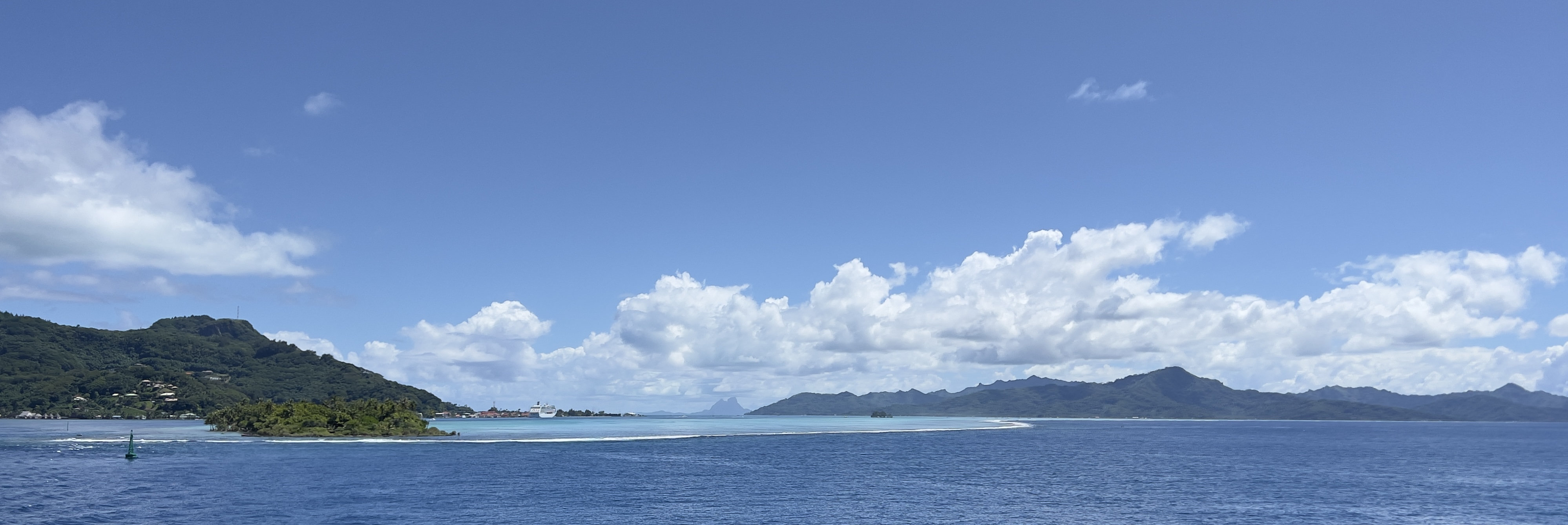
I don’t really know how to give an apt title to this blog post. The experience I want to write about is as big as Polynesia – which I think must be the largest area on the planet that is inhabited by a single coherent cultural group.

Check it out: the Polynesian Triangle encompasses the region from Aotearoa/New Zealand, to the islands of Hawai’i, to Rapa Nui/Easter Island. Each side of the triangle is around 7000 km long!
Although most of its area is wide open Pacific Ocean, there are over a thousand islands scattered throughout the triangle. These isles were settled by canoe, by the ancestors of the Polynesian inhabitants, over a period spanning several thousand years.
I was fortunate enough to spend two months at sea as a lecturer and expedition guide with Silversea this March and April, traversing nearly the entire Pacific: from Valparaiso, Chile, all of the way to Fiji. I have always felt an affinity to Polynesia and to its strong and capable seafaring people. (I come from seafarer stock, too – I am 100% Viking genetically! My mother is from Denmark, and my dad was Swedish/Norwegian.)
I have visited some of the Polynesian islands in my own travels over the past several decades. A highlight was meeting many of the master canoe carvers from Aotearoa, Tonga, Tahiti, Cook Islands and Hawai’i when I was the photographer at the Lahaina Festival of Canoes in 2003 and 2004.
This voyage was very special, because we stopped at nearly all of the inhabited Polynesian island chains across the Pacific, including: Rapa Nui/Easter Island, the Pitcairns, Mangareva, three islands of the Marquesas, two atolls in the Tuamotus, Tahiti, Bora Bora, three of the Cook Islands, Niue, Tonga and Fiji.
These places are really hard to get to!

One of the many things that struck me on this voyage was how connected all of these communities are by language and culture – in spite of the great distances between them, and the fact that prior to the arrival of Europeans, some communities were not in communication with one another for centuries at a time.

One example of this is the horn that is blown when visitors arrive. Depending upon which Polynesian dialect, it might be known as a pu.
Traditionally, the pu was blown by a watchman to warn the community of approaching canoes, but on our voyage it was also used to welcome us visitors. Here is a fellow welcoming us to Aitutaki, Cook Islands, with a pu made of a conch shell.
My understanding of the word is that “ta pu” or “ka pu” means “the conch shell” or “the horn” (depending upon which Polynesian dialect, ta or ka means “the”). However, as for many indigenous languages, there are deep layers of meaning to Polynesian words that we just don’t have in our Indo-European based languages. So tapu or kapu also means “sacred” – and it is where our English word “taboo” comes from.
When we visited the island of Raiatea, west of Tahiti, a local guide named Tihoti carried a pu with him. He used his pu almost like a speech element: to round us up and gather us around as he explained the sacred site of Taputapuatea to us – the tone of his notes getting more sharp and urgent when guests wandered too far away!
Tihoti’s pu was made of a piece of rosewood for the mouthpiece, and the “horn” part was a shell that is not from here, but from New Zealand – the pu was a gift to him from Maori visitors.

One of the most moving welcomes we received was at the remote village Hapatoni, on Tahuata, part of the Marquesas chain of islands. This was not a place well travelled by cruise ships, and as guides we were not sure what to expect when we got to shore. We drove the first zodiac in, rounding the rock breakwater for our first view of the village, and were astonished to see so many villagers out, chanting and singing to welcome us, and a watchman striding out over the rocks to greeting us with a pu.
As one of the guides, I was one of the first on shore, so I shot some videos on my phone of this stunning scene as we brought the guests in. I had no plan in mind – but I realized when I got back to the ship that I had enough clips to edit together a little piece about our welcome there. It was so emotional, to be greeted like this – I hope my little movie rouses a bit of those same feelings in you!
I have lots more travels coming up! If you would like to keep posted on the exciting things I am doing, or want to hear about upcoming opportunities to travel with me, please go to my Contact page and sign up for my mailing list. (Don’t worry, I don’t send many newsletters out at all – and I absolutely will never spam you or share your contact info!).
 Jacqueline Windh