My new article(s) about Polyesian canoes!
Yay – it is always exciting when you get a newly printed book which you are a contributor to in hand!
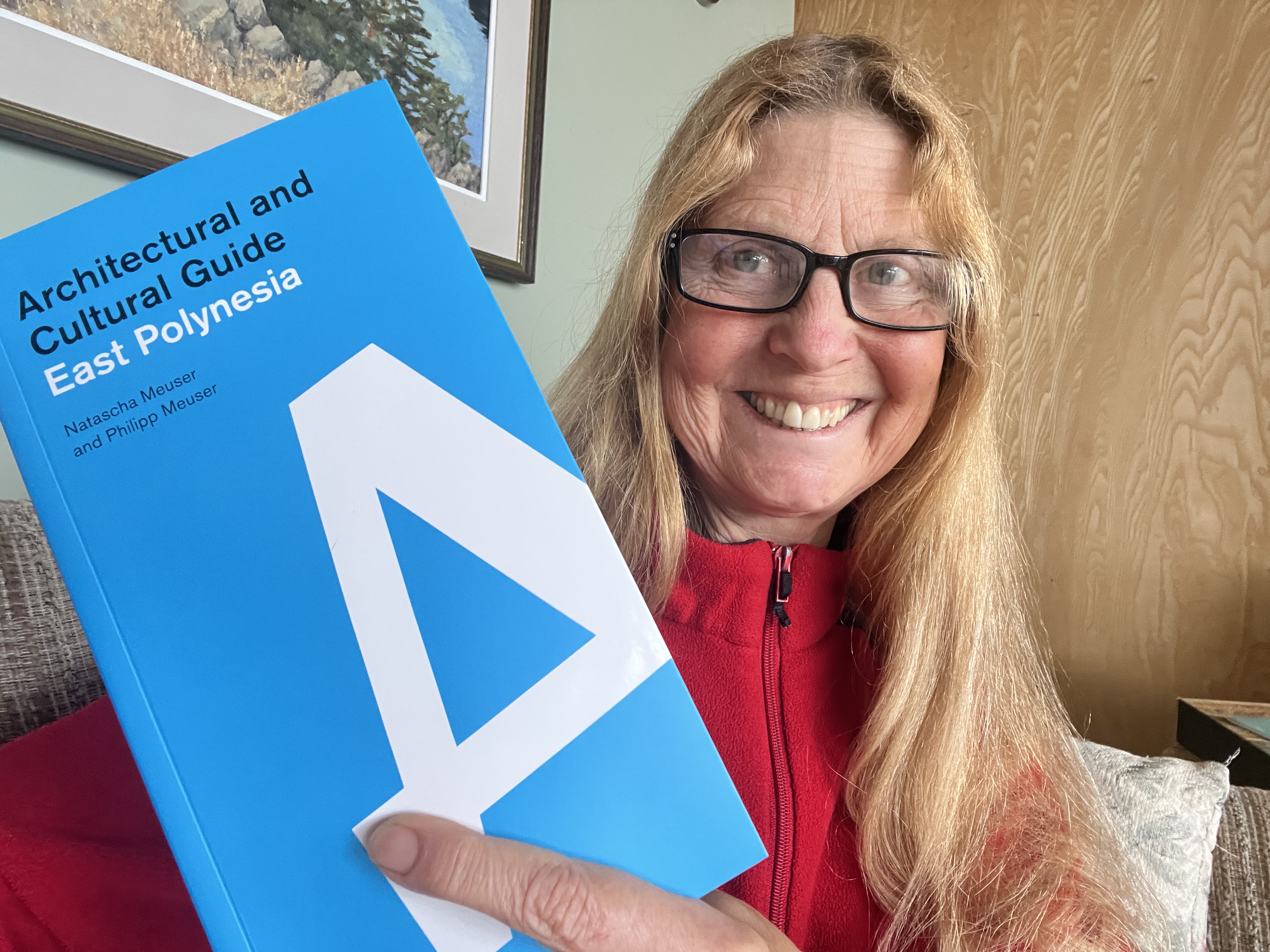
I was invited to write articles for two books about Polynesian canoes and culture by the publishers, Philipp and Natascha Meuser (DOM Publishing in Germany). I have just received my copies of the East Polynesia book, and the volume about West Polynesia is currently in press!
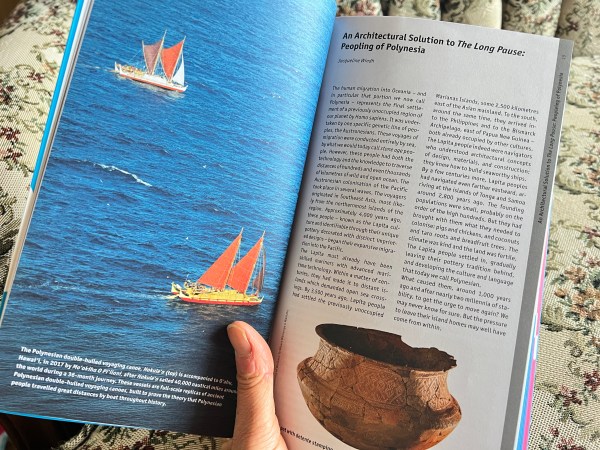
My contribution to this first book is a chapter on how Polynesian canoe design allowed these incredible maritime architects and navigators to settle most of the Pacific Ocean in just a few centuries.
The second article, for the West Polynesia book, goes into a lot more detail about canoe and sailing craft construction.
(The second article also addresses why we call these great sailing ships “canoes.” Basically the answer comes down to: if they were built by Europeans they are “ships,” and if they were built by brown people then they are “canoes.” Well, the Polynesian canoes were not only as big as the first European ships to encounter them – they were faster and more manoeverable! Captain Cook wrote, of the vessels he encountered in Tonga, “Amongst these canoes, there were some double ones, with a large fail, that carried between forty and fifty men each. These sailed round us, apparently, with the same ease, as if we had been at anchor.”)
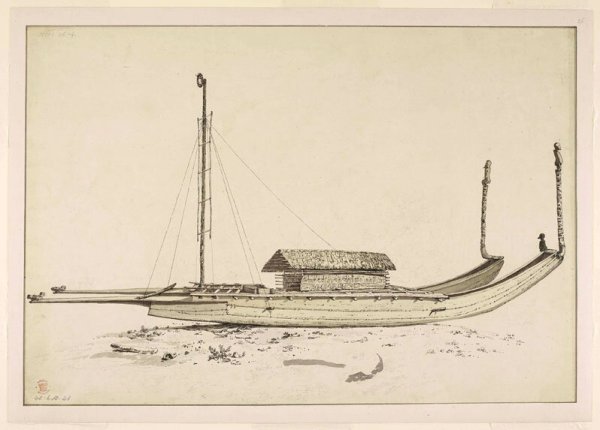
Here is a drawing by John Webber, official artist on Cook’s third voyage (1776-1780), showing a typical double-hulled sailing canoe.
These could be 15 m long (or more) and carry hundreds of people.
The double-canoe design (both double-hull and outrigger) originates with the Austronesians, ancestors of the Polynesians. The Austronesians migrated out of their Taiwan homeland around 5000 years ago, eventually settling a vast area of the planet (nearly half its circumference!) by sea: from Easter Island/Rapa Nui and Hawai’i in the east, to Madagascar in the west.
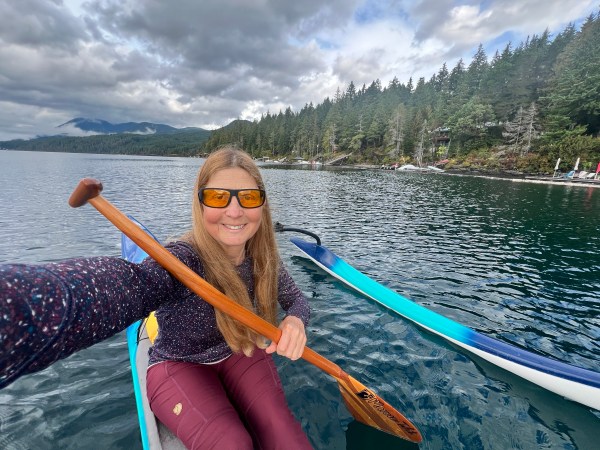
And today, their double-canoe design has made it around the world – from catamarans used as ferries and work boats, to high-tech racing catamarans, to outrigger canoes like the one I am paddling here. (This is me last week, sneaking in one last paddle as our weather here on Vancouver Island transitions from summer to winter – we don’t really get autumn here).
Anyway, I am super pleased with the design and layout the editors have come up with – lots of room for sketches and photos. I look forward to receiving the West Polynesia book in hand in a couple more months!
And – bonus to me – the research for these articles forms a part of the base for my next book, which will be about these very earliest ocean sailors and navigators.

I am excited to be heading back to Polynesia in November – as guest lecturer on the small cruise ship Paul Gauguin! If you would like to know more about this voyage (or about any other upcoming opportunities to travel with me – or about how to get a copy of this Architectural and Cultural Guide to East Polynesia) please go to my Contact page and sign up for my mailing list. (Don’t worry, I don’t send many newsletters out at all – and I absolutely will never spam you or share your contact info!).
 Jacqueline Windh